KEEP RATE
the numbers behind small online business
We Asked 7 People Who Quit 7 Different Online Business Models What They Do Now
(All 7 Gave The Same Answer)
"I did not leave dropshipping because it was hard. I left because after fourteen months I still did not own anything." — Ryan T., Former Dropshipper
In 2025 we tracked seven operators leaving seven separate models: dropshipping, Amazon FBA, print on demand, agency work, Etsy digital downloads, affiliate marketing and course building. None of them knew each other. Every one of them had put in at least nine months and real money. All seven landed in the same place: selling AI digital products they own outright, from a pre-built library called LOOT, for a one-time $47.
28,000 customers in 12 months. $34M generated for clients. Built with no face on camera.

1. The Dropshipper: 14 Months In, Nothing To Sell That Was His
Ryan T. spent $3,100 finding out that his best product was not his.
Dropshipping puts you in the middle of a transaction you do not control. The supplier owns the product. The platform owns the checkout. The ad network sets the price of every customer, and that price keeps rising. Meta CPM climbed around 20% year on year through 2025, with median cost per acquisition now near $38.19. When you are reselling somebody else's physical item on a 20% margin, $38 to acquire a buyer is not a bad month. It is the whole business model.
The structural issue is not effort. It is that nothing you build in dropshipping accumulates. Kill the ads and the business stops the same day.
With LOOT there is no supplier, no unit cost and no reorder. The 47 products arrive finished, with the funnels already built around them, so the money that used to go on test orders goes into traffic instead. Same effort, and the asset is yours.
✅ Kill the ads in dropshipping and the business stops that day. A product you own does not.
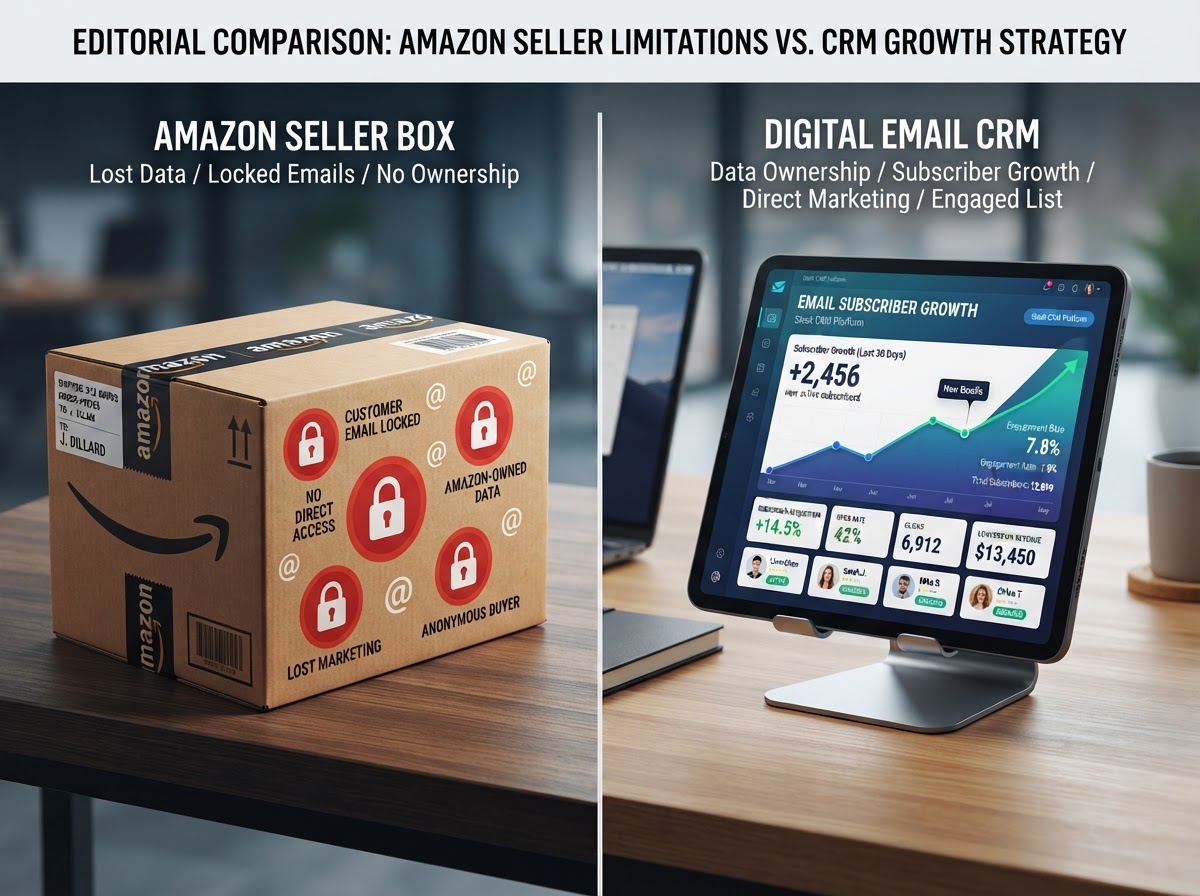
2. The FBA Seller: She Could Not Email A Single One Of Her 1,400 Buyers
Sophie N. had a working product and no way to reach the people who bought it.
Amazon FBA is genuinely good at one thing: putting your product in front of buyers. What it does not do is hand you the buyer. You cannot email your customer list, because it is not your customer list. Every sale rents you a moment of attention and then closes the door.
That matters more than it sounds. The cheapest revenue in any small business is the second sale to somebody who already trusts you. On FBA that revenue is structurally unavailable to you.
With digital products delivered from your own checkout, every sale is a customer record you keep. LOOT funnels arrive wired to your own list, with a $3K to $7.5K automated high-ticket backend sitting behind them, so the second and third sale are yours to make.
✅ Every sale becomes a subscriber you own, not a transaction you rent.
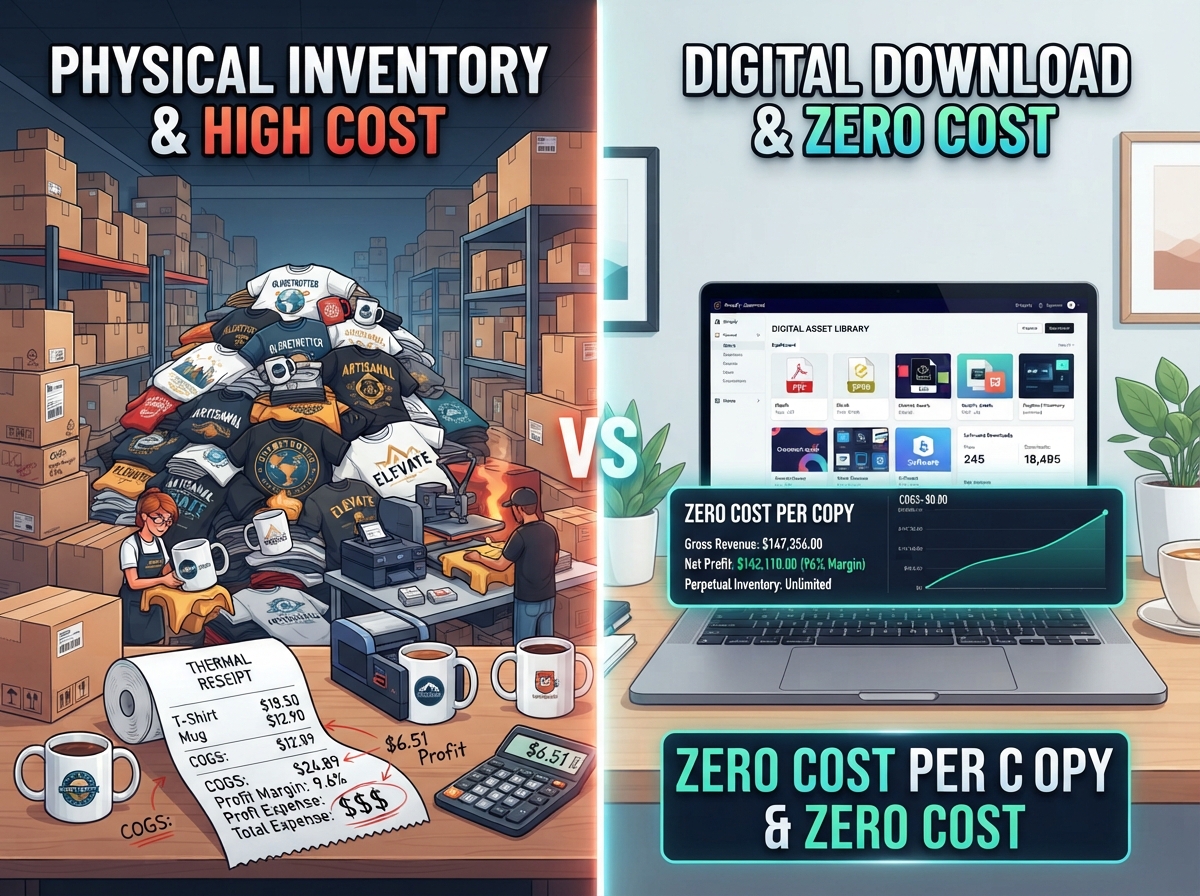
3. The Print On Demand Seller: $41 In, $6.20 Back
Dane K. sold 300 units in a quarter and could not explain where the money went.
Print on demand looks like a digital business and prices like a physical one. The blank cost, the print cost, the shipping, the platform fee and the payment fee all come out before you see anything, and the customer sets your retail price for you by comparing you against a thousand identical listings.
Nothing in that stack is a scam. It is simply a model where the manufacturer captures most of the margin while you carry all of the marketing risk.
Digital delivery removes every line item except the payment fee. Dane still sells a $47 product. He just keeps almost all of it, and the second copy costs him nothing to fulfil.
✅ No blanks, no printing, no shipping. The second copy costs you nothing.
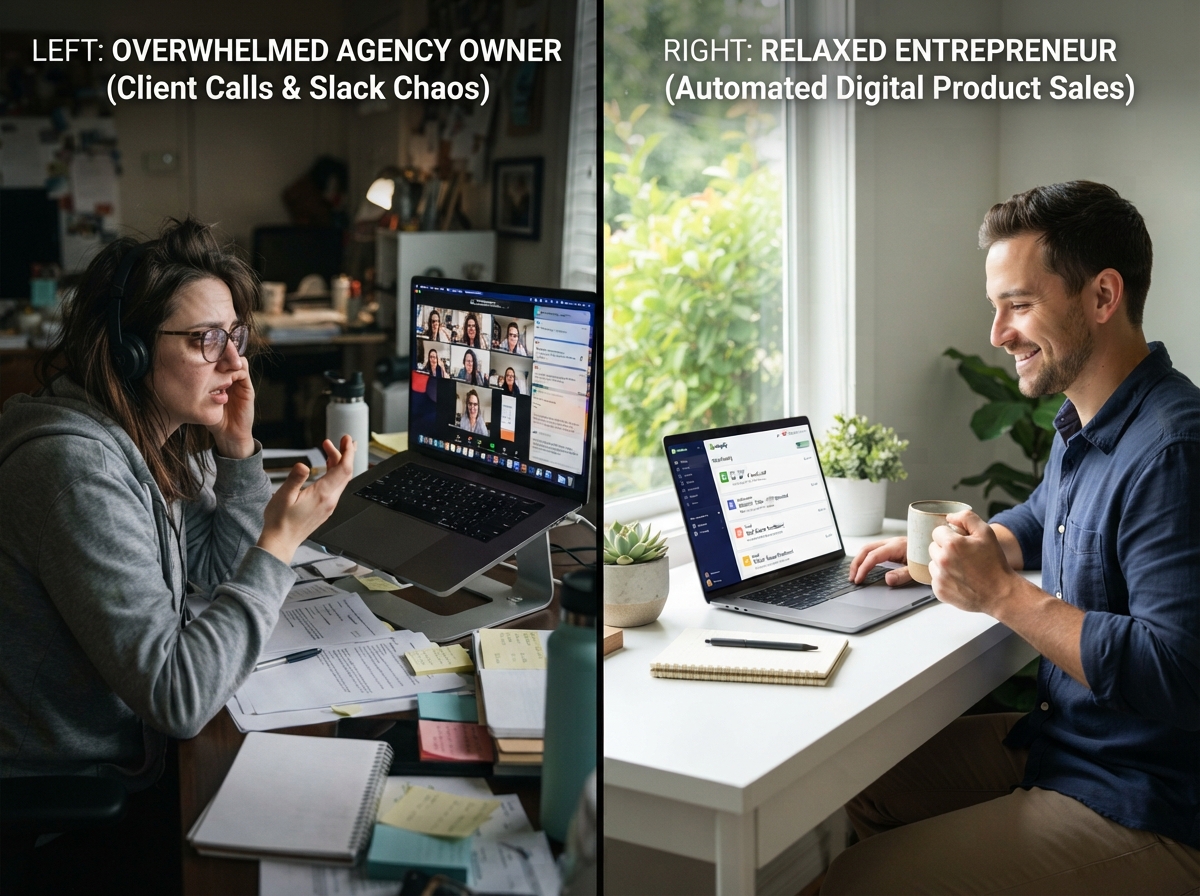
4. The Agency Owner: Five Clients, Zero Freedom
Priya A. hit $8,000 a month and worked more hours than she did as an employee.
Agency and SMMA work is the fastest model on this list to a first payment and the slowest to any kind of independence. You are selling hours. Growth means more calls, more reporting and more scope creep, and the month you stop delivering is the month the income stops.
There is also the exit problem. An agency built on your own delivery is a job with better branding. There is no version of it that keeps paying when you step away.
A digital product is the same work performed once. Priya kept two clients to cover her bills and put her evenings into a product library that sells without a call, a proposal or a project channel.
✅ Do the work once, sell it repeatedly, with no call and no proposal.
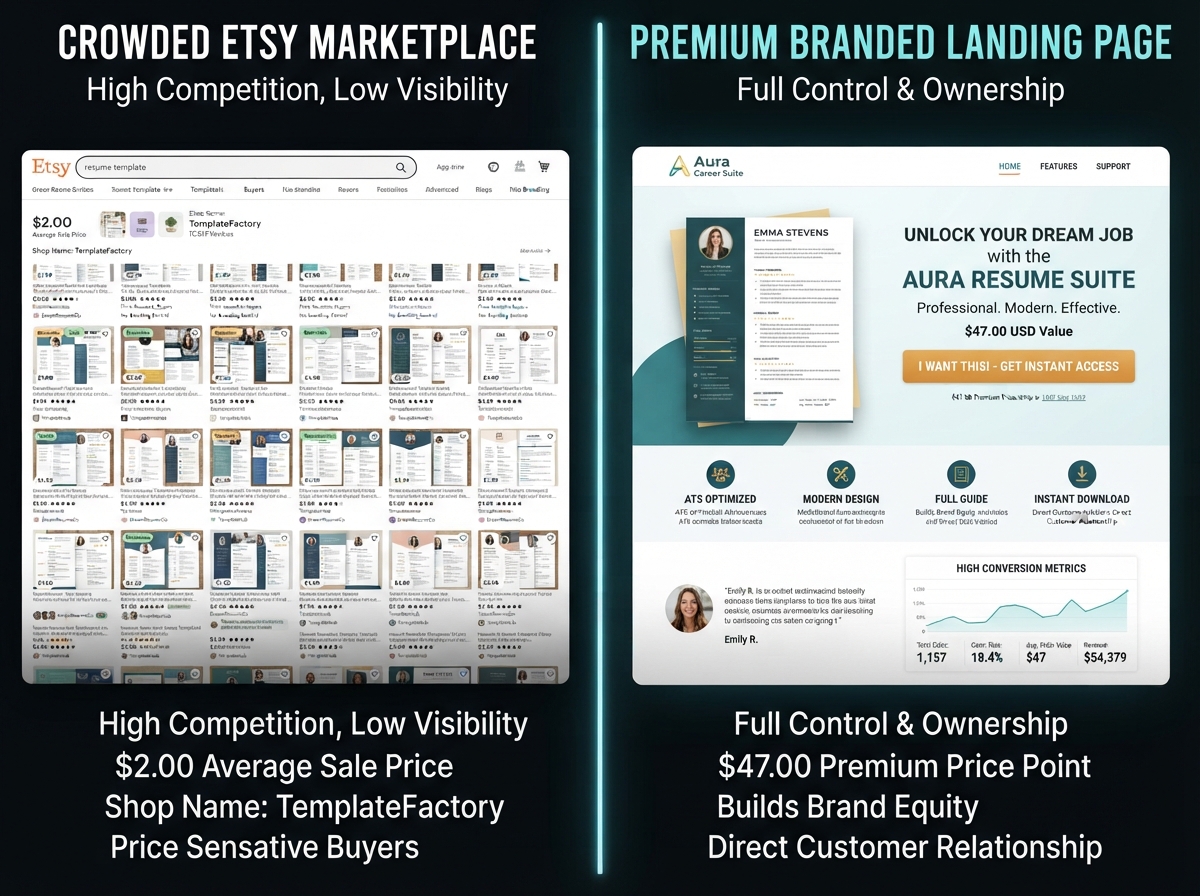
5. The Etsy Seller: 400 Listings And A Price Race She Could Not Win
Hollie M. watched her $12 template become a $2.99 template in nine months.
Marketplace digital downloads are the easiest place in the world to list a digital product, which is exactly the problem. Search rewards volume and price, so every good listing is cloned and undercut within weeks. Your differentiator becomes being cheaper than somebody who does not value their own time.
The wider numbers tell the same story. 89.2% of digital products on Gumroad have never made a single sale, out of more than 146,000 analysed, and 87% of digital product businesses never pass $1,000 in lifetime revenue. Listing is not the hard part. Being found and being believed is.
LOOT products do not sit in a marketplace competing on price. They sit behind their own funnels with their own tested ads, at the $30 to $49 price band that converts best in this category. You set the price, because nobody else is on the page.
✅ Your own page, your own price. No race to the bottom.
6. The Affiliate: Top Of The Leaderboard, Bottom Of The Margin
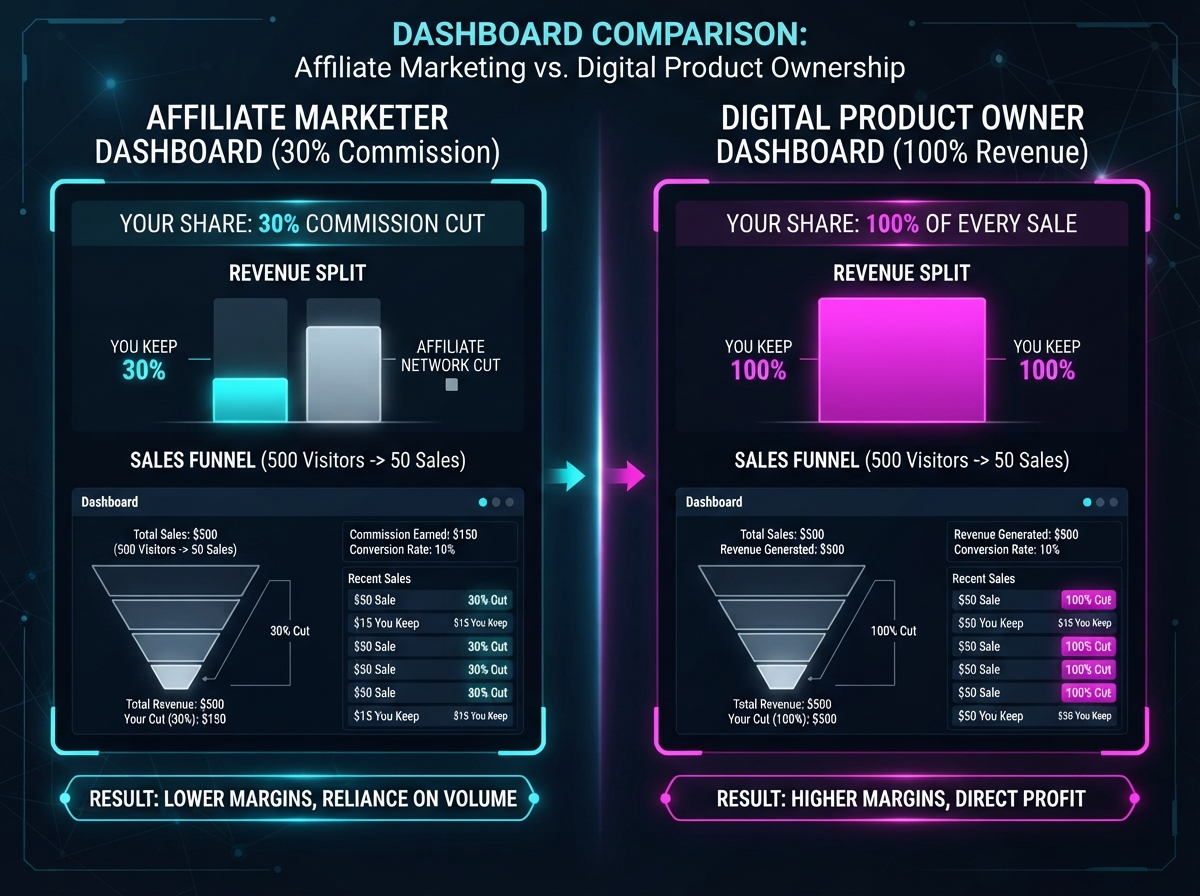
Terrence O. drove 211 sales for somebody else's offer and kept 30% of them.
Affiliate marketing is the only model here where you can do the hardest job in business, generating demand, and still not own the customer, the pricing, the upsell or the renewal. The vendor can change the commission, close the offer or bring the traffic in-house, and your income changes with it.
You are also paying full retail for traffic while earning a fraction of retail per sale. That maths only works at volume, and volume needs budget.
Same skill, whole margin. Terrence now promotes products he owns, at prices he sets, with the backend commission going to him instead of past him.
✅ Keep 100% of the front end and 100% of the backend.

7. The Course Builder: 90 Days Of Filming Before The First Dollar
Elaine W. paid for her course platform for four months before she had anything to sell on it.
Course platforms bill monthly from the day you sign up, and a course takes weeks to script, record, edit and structure. That is a subscription running against zero revenue while you find out whether anybody wanted the course at all.
Then there is the delivery problem nobody puts on a sales page. Average course completion sits at about 13.4%, and around 70% of buyers finish less than a third of the modules. Filming yourself for months is a large bet on a format most buyers abandon. For the 22% of business owners who say they feel too self-conscious on camera, it is not even an option.
No filming, no monthly fee, no face. LOOT installs in under 58 seconds, and Elaine had a live offer the same evening, which is roughly the point at which she would previously have been writing lesson one.
✅ No camera, no monthly software bill, live the same evening.
Seven People. Seven Models. One Answer.
Seven people, seven models, one answer. That is either a coincidence or a pattern, so we looked at what LOOT actually is.
It is a library of 47 complete AI digital products for $47 one time. Not ideas. Each one arrives with the funnel, the sales page, the advertorial, the VSL script, the Canva mockups and around 30 tested ad creatives from a vault of 1,273. Installation is one click, under 58 seconds. Behind the front end sits an automated $3K to $7.5K high-ticket backend.
The proof is the reason we ran the piece. $34M generated for clients. 28,000 customers in 12 months. An $862K month reached in 118 days, and a $12K day inside the first 100. Built without a personal brand and without the founder's face on camera, which is the detail that mattered most to five of our seven.
It is worth being precise about the claim. LOOT does not promise you money. It removes the expensive part of finding out whether you can sell: the building, the writing, the designing and the guessing. At $47 with a 30-day guarantee, the cost of answering that question is now smaller than the ad spend most people burn in an afternoon.
Hear It From Them, Not Us
28,000 Customers In 12 Months

"I stopped paying to find out."
Fourteen months of dropshipping taught me how to test products with my own money. This taught me how to sell something I own. The difference is that I still have it when I stop advertising.
"The list is mine now."
I sold 1,400 units on FBA and could not email one buyer. My first week with my own checkout, I had 61 people I could actually talk to again.
"Live the same evening, no camera."
I had spent four months on a course nobody had bought yet. I installed this after work and had an offer live before bed. Nothing to film.
Seven Models. One Switch. $47.
Every person in this article paid hundreds or thousands to find out whether they could sell online. You can find out for less than a dinner.
Normally $297.00 — Now Only $47.00 Today!
GET THE $47 LOOT LIBRARY 🚀
47 complete AI digital products. Funnels, ads, advertorials, VSL scripts and mockups included. One-click install in under 58 seconds. One-time payment, no subscription, 30-day guarantee.