
We Priced Out 8 Ways To Make Money Online With AI Digital Products. Only One Got A Reader To A Live Offer For Under $50.
We spent 12 weeks pricing every popular online income model on two numbers nobody advertises: what it really costs you before your first sale, and how many hours you burn before you have anything live. Seven of the eight models were worse than advertised. One of them changed how we grade this whole category.

There is a number in this industry that almost nobody puts on a sales page. 89.2%. That is the share of digital products on Gumroad that have never made a single sale. Not a slow month. Not a disappointing launch. Zero. Out of more than 146,000 products analysed, 131,658 of them have never sold one unit.
Sitting next to it is a second number that explains it. 87% of digital product businesses never pass $1,000 in lifetime revenue.
We started this audit expecting to find that the people failing were lazy, or late, or in bad niches. That is not what we found. Most of them did the work. They picked a model, followed a tutorial, built a product, made a page, and ran out of money and patience somewhere between the product and the first customer.
The gap is not effort. It is that almost every model in this category asks you to pay for the expensive part yourself, in cash and in evenings, before you find out whether anyone wants what you built.
So we stopped grading these models on how much money you could theoretically make. We started grading them on what it costs to find out.
How We Tested
We ran the same exercise on eight models over 12 weeks. In each one we acted as a complete beginner with no audience, no email list, no design skill, and a hard ceiling: no more than a few hundred dollars and evenings only. Every model was graded on three things, and nothing else.
- Cost To First Sale: Everything you have to pay for before one dollar comes back. Software, templates, design, copy, ad testing budget, listing fees, platform cuts. Not the headline price. The all-in price.
- Hours To A Live Offer: How long from paying your money to having something a stranger can actually buy. Research, writing, building, designing, uploading, connecting a checkout. We counted the hours honestly, including the ones spent watching tutorials.
- Ownership And Ceiling: When a sale happens, who owns the product, the page and the customer? And can the model realistically pass $10,000 a month without you personally being on camera, on calls, or on the clock?
| Model | Realistic cost to first sale | Hours to a live offer | Who owns the customer | Grade |
|---|---|---|---|---|
| Done-for-you digital product portfolio (LOOT) | $47 one time | Under 1 hour | You | A+ |
| Self-built products on Gumroad | $300 to $1,200 | 60 to 120 hours | You | A- |
| Amazon KDP low content books | $150 to $600 | 40 to 90 hours | Amazon | B+ |
| Affiliate marketing | $200 to $900 | 25 to 60 hours | The vendor | B |
| Course business on Kajabi | $1,000 to $2,500 | 80 to 150 hours | You | B- |
| Print on demand | $400 to $1,500 | 30 to 70 hours | The platform | C+ |
| Dropshipping | $1,200 to $4,000 | 50 to 100 hours | Shared, poorly | C |
| Agency or SMMA | $500 to $2,000 plus your calendar | 40 hours plus ongoing | You, and they own your hours | C- |
Two things jumped out of that table before we had finished filling it in. The first is that the gap between the cheapest model and the second cheapest is not small. It is roughly one order of magnitude. The second is that in five of the eight models, the money and the hours both go out before you learn anything. That is the part that ends most attempts, and it does not look like failure. It looks like attrition.
The Three We Cannot Recommend In 2026
Dropshipping. The model works, but the version sold to beginners does not. You are paying for ad testing on products you do not own, at margins that have been compressed for four years, in a category where the median Meta CPA is now $38.19. Paying $38 to acquire a customer on a $30 product with a 20% margin is not a business. It is a subsidy.
Print on demand. Genuinely low risk, genuinely low ceiling. Your per-unit profit is set by someone else, your designs are competing against thousands of near-identical ones, and returns and shipping problems land in your inbox even though you never touched the product.
Agency or SMMA. This one is not a bad business. It is a bad answer to the question this audience is asking. You have replaced one boss with several, your income stops the week you stop working, and you now need to be on calls. If your goal was to stop trading hours for money, this model sells you more hours.
None of these three are scams. They are all just structurally wrong for someone with limited cash, limited evenings and no interest in being the face of anything.
The Ranked Top 5
LOOT, 47 Done-For-You Digital Products For $47
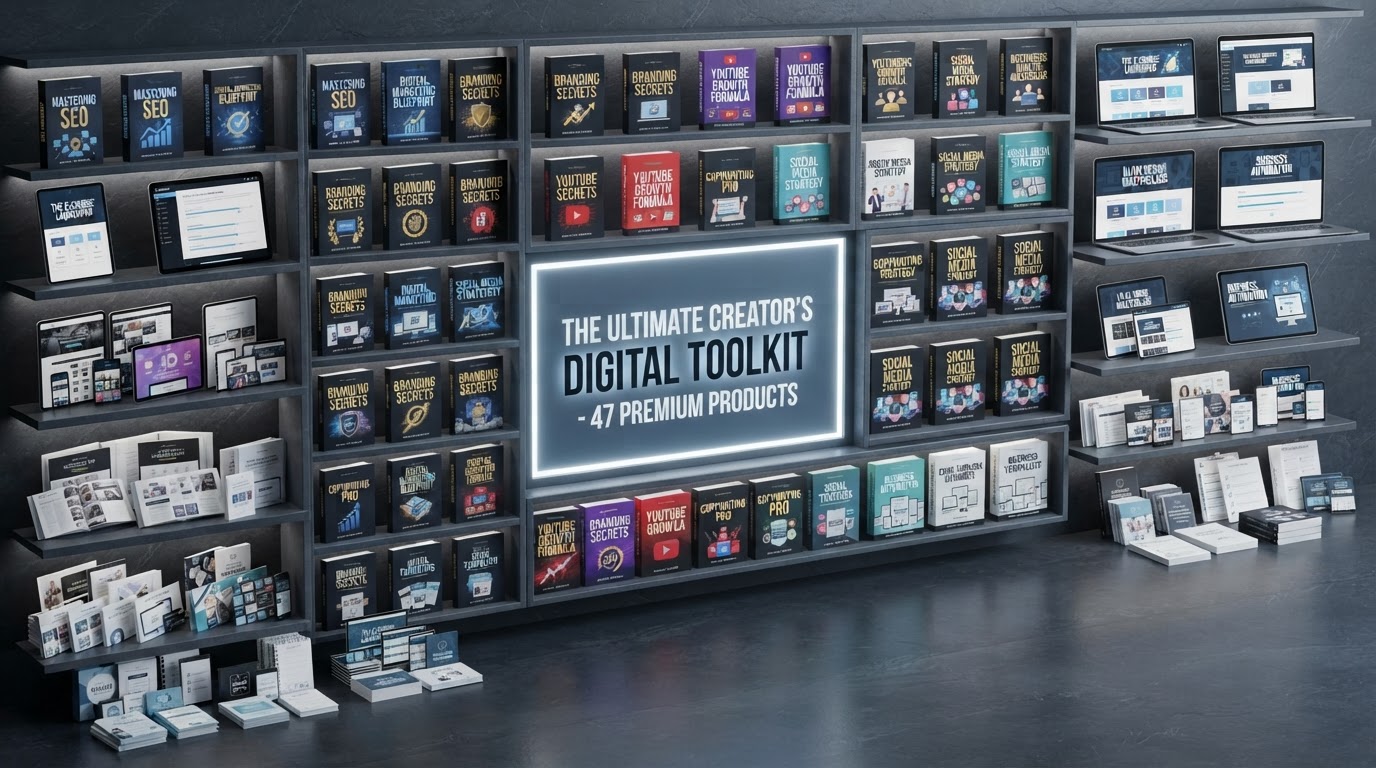
We nearly left this one out of the audit. A $47 price tag on something described as 47 complete digital product businesses reads like the setup to a disappointment, and we have reviewed enough $27 'business in a box' PDFs to be cynical about it.
What changed our position was reading the manifest properly. LOOT is not a course about digital products. It is the inventory. You get 47 complete packages, and each package contains the parts that normally cost you the three months and the thousand dollars: a six-step funnel already built, the digital product itself, 30 written Meta ads, 10 Google ads, a pre-written advertorial, a VSL script, Canva mockups, and an automated high-ticket backend offer worth $3,000 to $7,500 attached to the back of it. Across the whole portfolio that is 192 plus products.
Every one of those funnels was run with real ad spend before it was packaged. That distinction matters more than any other claim on this page. In most of this category, proven means the seller believes in it. Here it means money was spent finding out.
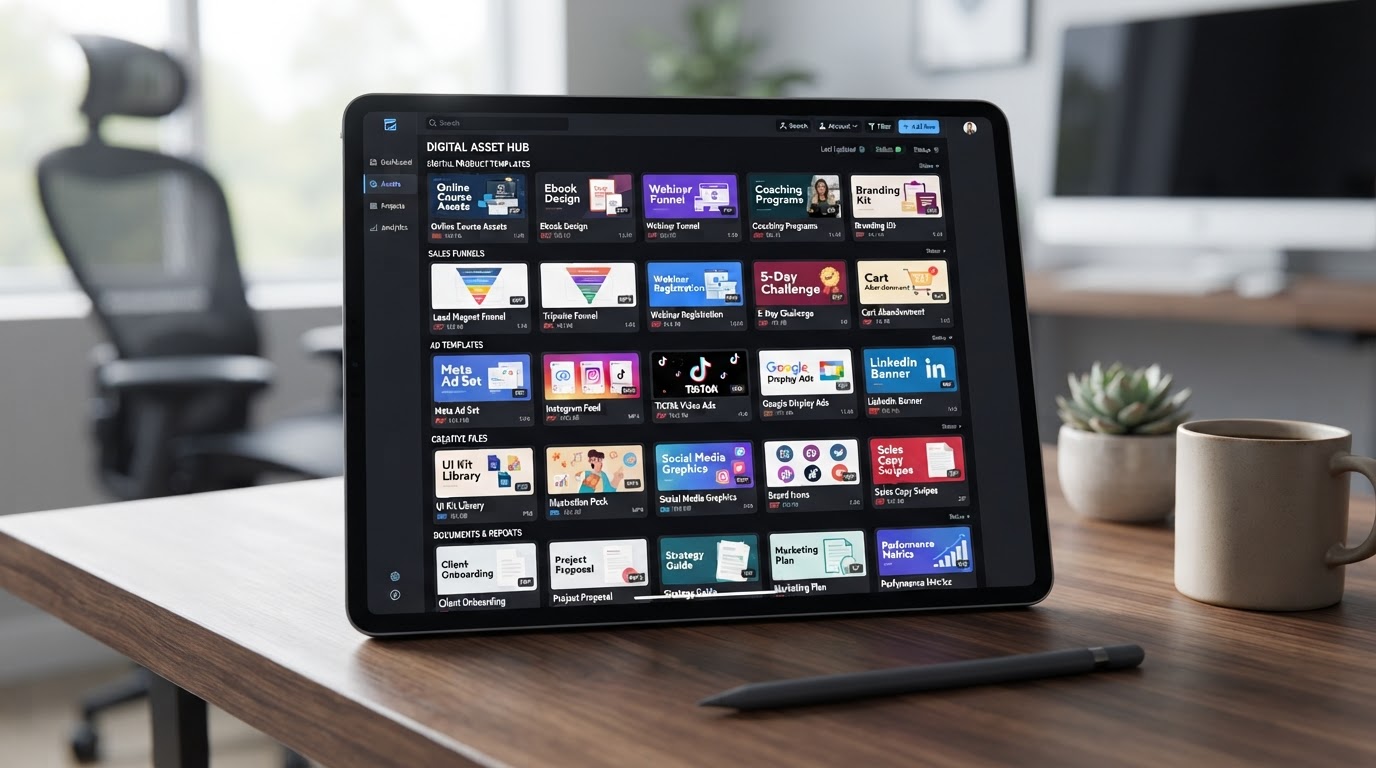
On cost to first sale it is not a close contest. $47, one time, no subscription underneath it. Compare that to the honest cost of building one equivalent funnel yourself: a funnel builder at roughly $97 a month, a copywriter at $1,500 or more for a sales page, ad creative at several hundred, design on top. You are looking at low four figures for one product. This is 47, for the price of a takeaway.
On hours to a live offer, the install is a single click and takes under 58 seconds. We want to be precise about what that means. It does not mean you make money in 58 seconds. It means the part that stops most people, the building, is already finished. You choose a product, install it, connect your payment details, and you have a live offer. What happens next is still on you.
On ownership and ceiling, you own the funnels and the products, and the customer is yours. The high-ticket backend is the part most bundles in this price range simply do not have, and it is where the model stops being pocket money. A $47 front end with a $3,000 to $7,500 offer behind it is a completely different business to a $47 front end on its own.
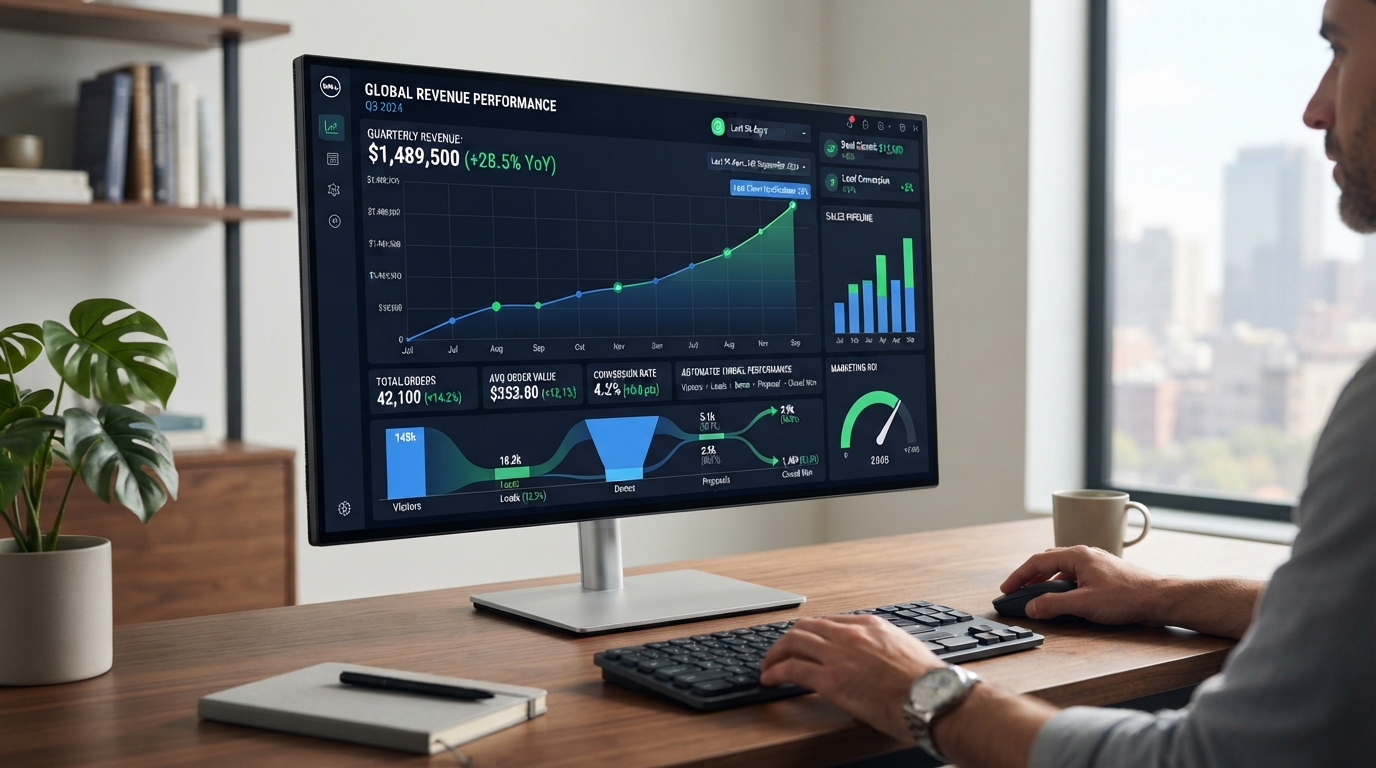
The system these assets came out of has produced $34 million for clients, 28,000 plus paying customers in 12 months, $862,000 in a month reached 118 days from the start, and a $12,000 day inside 100 days. The founder built it without a personal brand and without appearing on camera, which is the specific route most of this audience is asking for.
What is included
- 47 complete done-for-you digital product packages
- 192 plus individual digital products
- A six-step funnel per product, pre-built and installable in one click
- 30 written Meta ads and 10 Google ads per product
- A pre-written advertorial per product
- A VSL script per product
- Canva mockups per product
- An automated high-ticket backend offer worth $3,000 to $7,500 per product
- The ad vault, 1,273 real ad examples including the $724,000 a month record holder
- Bonus: the 48-part Zero to $100K training
- 24/7 live chat support
- 30-day money-back guarantee
PROS:
- Lowest cost to a live offer of anything we tested, by a factor of ten
- Nothing to write, design or build before you can sell
- Assets were tested with real ad spend, not just reviewed internally
- The high-ticket backend gives it a ceiling the rest of this price bracket does not have
- No camera, no personal brand, no sales calls required
- 30-day guarantee means the download risk is effectively zero
CONS:
- You still have to drive traffic. It hands you the shop, not the shoppers
- 47 packages is a lot of choice and it is easy to spend your first week browsing instead of launching. Pick one and go
- Only available direct from the official page. There is no legitimate resale version
One time payment. Instant access. 30-day money-back guarantee.
Self-Built Digital Products On Gumroad

If you want to build the whole thing yourself, this is still the cleanest way to do it. Gumroad handles checkout, delivery, VAT and refunds, and you keep control of your product and your pricing. For a genuinely good product in a niche you know well, it works. The problem is the one we opened this article with. 89.2% of products on the platform have never sold a single unit. The platform gives you a checkout, not customers, and it does nothing about the two hardest jobs: making something people want and writing the page that sells it.
Best for: people with an existing audience or real expertise in a specific niche.
What holds it back: you supply the product, the copy, the funnel and the traffic. The 60 to 120 hours are unavoidable.
Amazon KDP Low Content Books

Real model, real money, and Amazon brings its own buyers, which is rare in this list. Low content books like planners, journals and logbooks are cheap to produce and there is genuine ongoing demand. Two structural problems keep it at third. Your royalty per unit is small, so this is a volume game measured in hundreds of listings. And Amazon owns the customer completely. You will never know who bought your planner, you cannot email them, and you cannot sell them anything else. You are building on rented land, and the rent is your entire customer list.
Best for: patient people who like producing volume and are happy with slow compounding.
What holds it back: no customer ownership, thin per-unit margins, and discovery is close to a lottery.
Affiliate Marketing

The fastest of the self-built options, because you skip product creation entirely. Someone else made the thing, you send buyers, you take a cut. For anyone who can write or run traffic, it is a reasonable place to start. It ranks fourth for one reason. You own nothing. Not the product, not the page, not the customer, not the commission rate. A vendor can halve your payout, change attribution windows, or close their programme on a Tuesday, and your business changes shape without you being consulted.
Best for: people who want to learn traffic and copy before they own a product.
What holds it back: zero ownership and zero control over the economics.
A Course Business On Kajabi
Kajabi is good software. That is not the issue. The issue is what it asks of a beginner. You are paying a meaningful monthly fee before you have made a sale, and you still have to create the entire course, write the sales page, and build the funnel yourself. There is also the completion problem, which the industry does not enjoy discussing. Average course completion sits at 13.4%, and 70% of buyers finish under 30% of the modules. If you want to build a course business, expect refund requests and expect to care about it.
Best for: established experts with an audience already waiting.
What holds it back: the highest cost to first sale in our top five, and a monthly bill that starts before your revenue does.
Why Our Team Ranked LOOT First

We do not normally put a $47 product at the top of a list that includes established platforms. This is the reasoning, in the order it mattered to us.
It removes the step where everyone quits. Almost every failure we looked at happened between having an idea and having something live. LOOT deletes that step.
The assets were tested with real ad spend. Not focus grouped. Not reviewed internally. Run, with a budget, before packaging.
Volume that changes the odds. One product is a bet. 47 is a portfolio. You can afford for the first three to teach you something.
It has a real backend. A $3,000 to $7,500 automated high-ticket offer behind each front end. Nothing else at this price has this.
Meta rewards good creative more than ever. CPA for advertisers with strong creative hit a five year low in 2026 while everyone else pays more for worse results. Starting with 30 written ads per product is a material advantage.
It fits the price band that converts. Products priced $30 to $49 convert 28% better than sub-$10 products. The products you are handed are already priced in the sweet spot.
No camera, no personal brand, no calls. The only model in our top five that fully respects that constraint.
The downside is $47 and covered by a guarantee. We ask one question at the end of every audit: what does being wrong cost? Here it costs less than a takeaway.
Related From The Margin Report
- The 89% Problem: Why Most Digital Products Never Sell A Single Unit →
- What One Digital Product Funnel Actually Costs To Build From Scratch In 2026 →
- The Faceless Economy: Why 38% Of New Creator Income Has No Face Attached →
- Ad Creative Is Now The Whole Game: Reading The 2026 Meta CPA Data →
- Buying Assets Instead Of Education: A Different Way To Start →
You Can Spend The Next Three Months Building One Product. Or You Can Own 47 Of Them Before Tonight.
Every model in this audit except one asks you to pay the expensive part first, in cash and in evenings, and find out later whether it was worth it. That is why 87% never pass $1,000. 47 complete funnels. 192 plus products. 30 Meta ads and 10 Google ads per product. Advertorials, VSL scripts, Canva mockups, and a $3,000 to $7,500 automated backend behind each one. One payment of $47, and a 30-day guarantee if you disagree.
Get Instant Access For $47 →One time payment. Instant access. 30-day money-back guarantee.
Comments (12)

The cost to first sale column is the only honest table I have seen on this subject. I lost about $900 on dropshipping in 2024 learning exactly what is in row seven.

Bought on Tuesday, mostly because I have been trying to write my own planner product since February and still have not finished it. Installed one funnel Wednesday morning before work. It is live. That alone was worth the $47 to me.

Fair review but you have undersold the traffic problem. Having 47 funnels does not mean you have 47 audiences. People need to know they still have to learn how to buy traffic.

Agreed, and we said so in the cons. It hands you the shop, not the shoppers. The advantage is that you are learning traffic against pages that already convert instead of learning both at once.

The camera thing is the whole reason I clicked this. I am 51 and I am not doing TikTok dances. Nice to read something that does not assume everyone wants to be an influencer.

Sceptical about the 58 second claim so I timed it. It was not 58 seconds for me, closer to three minutes because I had to set up my payment details first. Still, three minutes versus the two months I spent on my last attempt. Not complaining.

Anything at $47 that claims this much is a red flag for me. Sorry.

That was my instinct too. What moved me was the 30 day guarantee. Worst case you ask for it back. I did not.

Wish I had read the Kajabi section before I paid for a year up front. Sitting on a subscription and half a course I have not finished. Learn from me.

The KDP grade is about right. I have 40 listings up. It works, it is just slow and Amazon keeps every customer. You never own anything.
Two weeks in. Made my money back off the first funnel and I am now reading the ad vault properly, which is honestly the part I underestimated. 1,273 real ads to copy structure from is worth more than the products to me.
Started reading this expecting the usual affiliate nonsense and got an actual cost breakdown. The three you refused to recommend earned my trust more than the top five did.